Home
Header

What is Citizen Science?
Citizen Science is a way for all of us to get involved in science and be a part of real scientific research. There are a growing number of Citizen Science projects underway across Australia and worldwide. We are inviting you and your family to be a part of it.
Citizen Science projects often involve people making scientific observations of the natural world in their local communities. When people share what they see in their own neighbourhoods, scientists can compile the information and we can learn more about the environment that surrounds us.
To learn more about Citizen Science, visit: citizenscience.org.au/10-principles-of-citizen-science/
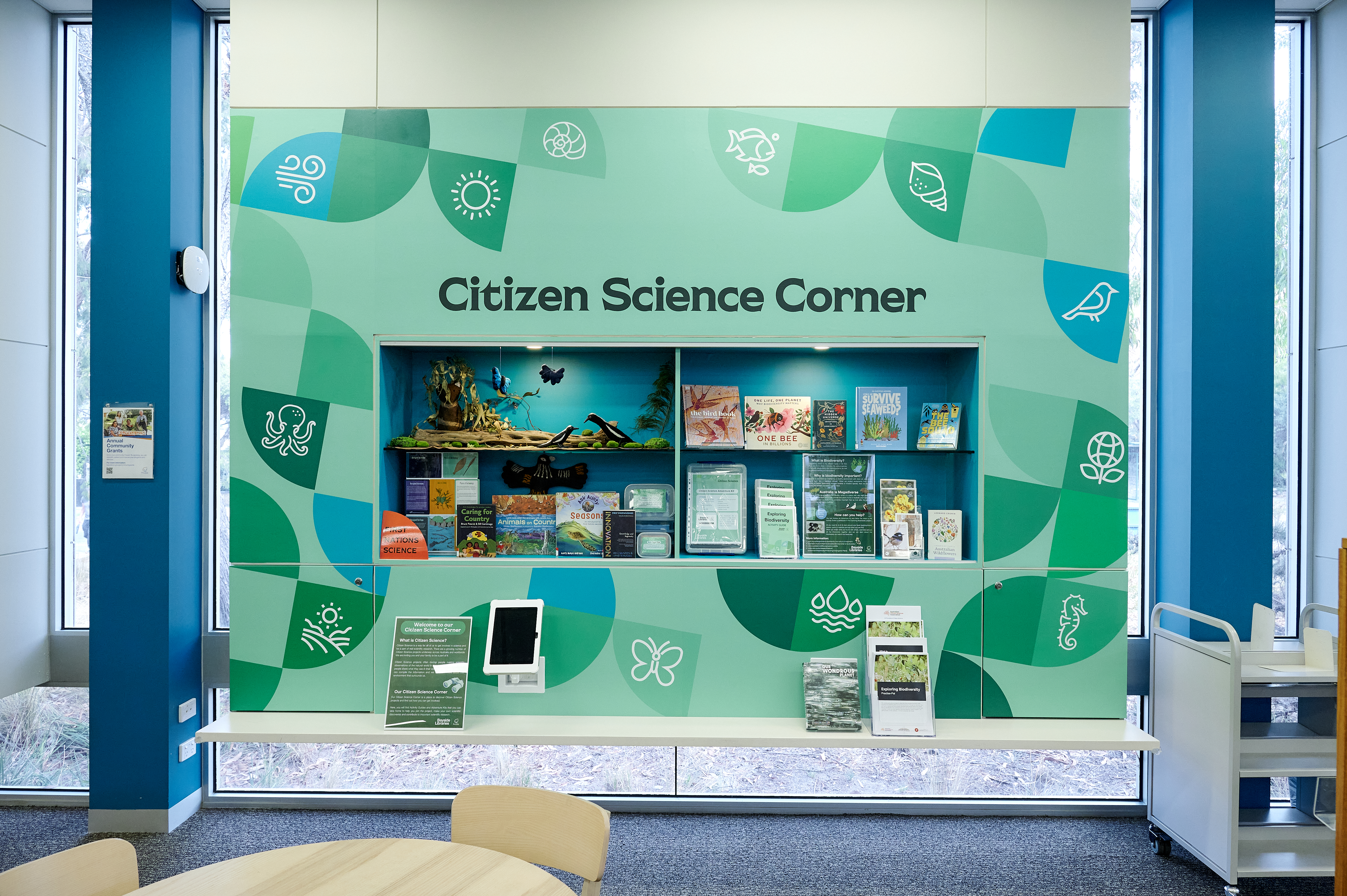
Our Citizen Science Corner at Beaumaris Library
Our Citizen Science Corner is a place to discover Citizen Science projects and find out how you can get involved. You will find Activity Guides and Adventure Kits that you can take home to help you join the project, make your own scientific discoveries and contribute to important scientific research.
How to get involved : The Exploring Biodiversity Project
The first Citizen Science project we are joining is the Exploring Biodiversity project. Exploring Biodiversity is a citizen science project that involves people helping to identify the plants and animals in their local area.
To join the project, download an Exploring Biodiversity Activity Guide and follow the steps to get started.
The Exploring Biodiversity project uses iNaturalist, a global platform for observing, identifying and documenting plants and animals. The iNaturalist app is able to record the location a photo was taken and suggests probable identification options for the picture you provide. It’s ok if you don’t know what something is. Other experts using the app can suggest identifications as well.
You can download the iNaturalist app from the Apple App Store or the Google Play Store.
What is Biodiversity?
Biodiversity refers to the different types of life that there are in one place. It includes the various species of animals, plants, fungi and microorganisms, as well as different habitats and ecosystems. Biodiversity is important for maintaining a healthy environment with clean air and water, plenty of food, and a regulated climate.
Image